Announcements
Last updated 3 March 2026
On this page

Learning Together with Different Strengths and Needs
Refreshed approach to support primary students with academic strengths and talents
From 2027, MOE will support more students in accessing existing school-based provisions (in-curriculum extensions and after-school programmes) to develop them in their domains of strength.
Around 10% of the cohort will be able to benefit, up from around 7% today.
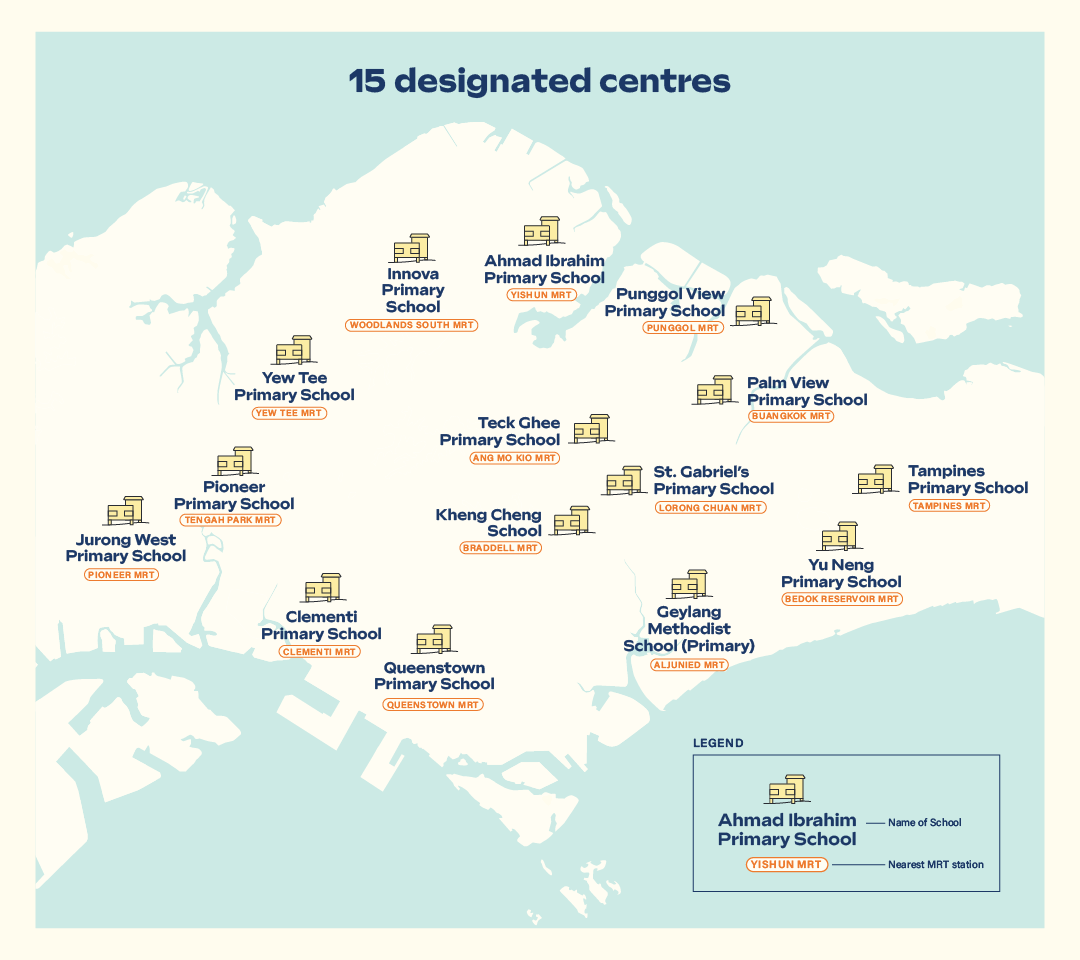
Students assessed to benefit from further stretch can choose to attend weekly advanced modules in English, Mathematics, or Science at 15 designated centres near their own schools. There will also be interdisciplinary modules conducted during the holidays.
Primary 3 students in 2026 will be the first batch of students to undergo the refreshed identification process.
In addition to the one-stage identification exercise in August, schools may also identify students using supplementary sources, such as teacher observations and student work. MOE will support schools in the process.
Students can also be identified at the end of each semester in Primary 4 and 5 to join the provisions.
Strengthened support for students from disadvantaged backgrounds
From 2026, MOE will provide additional manpower and funding to more schools (from 100 schools to 157 schools). Around 20,000 students will benefit annually.
We will work with schools to better identify students from disadvantaged backgrounds and provide them with customised and coordinated support. This includes:
School-based interventions
After-school engagements
Ongoing collaboration with public agencies and community partners
New Post-Secondary Admissions Exercise in 2028
With the common Singapore-Cambridge Secondary Education Certificate (SEC) examination from 2027, secondary students can use their SEC examination results to apply for various post-secondary pathways at the same time when they receive their results in January 2028.
From 2028, MOE will implement a new Post-Secondary Admissions Exercise (PSE) to replace the current admission exercises for admission to Post-Secondary Education Institutions (PSEIs) such as, Junior Colleges (JC), Millennia Institute (MI), Polytechnics and the Institute of Technical Education (ITE) (2-Year and 3-Year Higher Nitec).
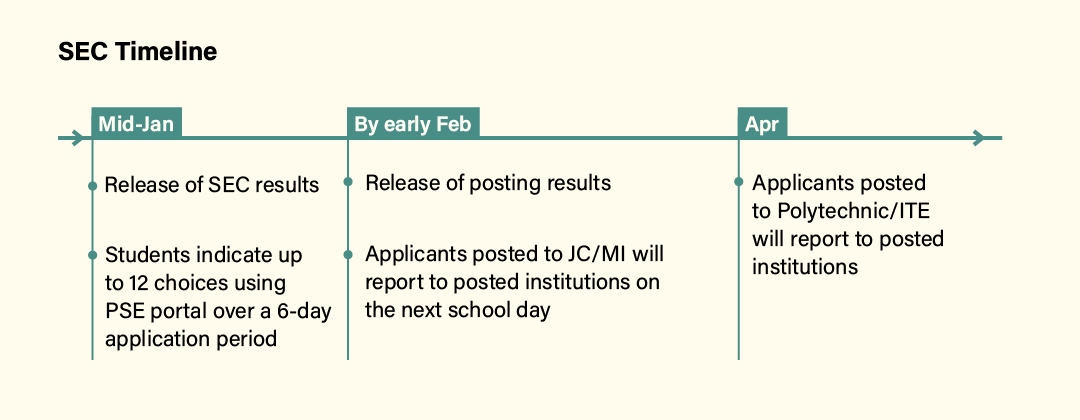
To encourage students to prioritise schools and courses based on their strengths and interests, choice order will be introduced as a posting tie-breaker (i.e. when applicants have the same net aggregate scores) for the PSE, in this order:
Citizenship,
Choice order,
Gross aggregate score,
Computerised balloting.
The Direct School Admission-JC (DSA-JC), Poly-Early Admissions Exercise (Poly-EAE), ITE-Early Admissions Exercise (ITE-EAE) for admission into JC, Polytechnic and ITE respectively, will continue.
Expansion of Special Education (SPED) school capacity
From the second half of 2026 to the early 2030s, MOE will work with Social Service Agencies (SSAs) to expand SPED school capacity to meet rising demand for students with Autism Spectrum Disorder with Intellectual Disability (ASD-ID).
Additional Campuses at three SPED schools:
MINDS Fernvale Gardens School (operating at an interim site from 2nd half of 2026 in the East region)
MINDS Lee Kong Chian Gardens School (operating at an interim site from 2nd half of 2026 in the Central region)
MINDS Towner Gardens School (operating at an interim site from 2027 in the East region)
The fourth MINDS SPED school, Woodlands Gardens School will relocate to a larger interim site in the North region from 2027.
MOE is studying the establishment of three new ASD-ID schools across the island to enhance geographical accessibility. MOE will be partnering three SSAs (APSN Education Services Ltd., Autism Association (Singapore) and St. Andrew’s Mission Hospital), with experience and domain expertise, to set up these schools.
More details will be shared when ready.
With these three new schools, the number of SPED schools serving students with ASD-ID will increase from 13 to 16, bringing the total number of government and community-funded SPED schools across various disability types to 30^, up from the current 26. This expansion will increase capacity to serve around 30% more students, from 9,000 today to about 12,000.
^ Includes the existing 26 SPED schools, the 3 new ASD-ID schools, and Pathlight School 3 in Punggol.

Adapting Together for an AI-Transformed Future
Strengthen students' AI literacy throughout their education journey
MOE will continue to equip students for an AI-transformed future.
AI literacy is integrated into the curriculum, co-curriculum, and self-directed learning resources, with defined developmental milestones to further develop our students’ digital literacy and technological skills.
The “Code for Fun” programme in primary and secondary schools will be updated to strengthen students’ AI skills. It will be made available to all schools in 2027.
Cyber Wellness lessons in the Character and Citizenship Education curriculum have been updated to include validating information by generative AI and identifying deepfakes.
More support for AI upskilling
To help workers assess their AI readiness level and training needs, SkillsFuture Singapore (SSG) in partnership with the Singapore Institute of Technology (SIT), will develop a self-diagnostic AI readiness tool. Individuals can access this tool via the MySkillsFuture (MySF) portal, which will also be enhanced with improved curation and signposting of SSG-supported AI-related courses.
Users will be able to gauge their AI readiness level based on various AI worker archetypes and receive course recommendations appropriate for their readiness level. The self-diagnostic tool, together with the enhanced MySF portal, will be rolled out by 2Q 2026.
All Institutes of Higher Learnings (IHLs) will offer selected AI-related courses for their alumni at a significant discount for one year starting in the second half of 2026. More details will be released by the individual institutions.
SSG will also introduce the Small and Medium Enterprises (SME) AI Skills Launchpad by working with its industry partners to support SMEs in elevating AI awareness and facilitating the adoption of AI solutions and training.
SkillsFuture Queen Bees and Skills Development Partners will offer free AI masterclasses and advisory services to SMEs.
SMEs will also have access to a comprehensive AI resource page on the SkillsFuture for Business Portal, as well as curated AI skills and courses on the TalentTrack platform. These initiatives will be progressively rolled out from March 2026.

Growing Together Through Lifelong Learning
Merger of SkillsFuture Singapore (SSG) and Workforce Singapore (WSG)
SSG and WSG will merge into a new statutory board jointly overseen by the Ministry of Manpower (MOM) and MOE. The merger will tighten integration between skills training and employability, to support Singaporeans in seizing new opportunities, and build a more seamless, end-to-end training, career and employment services ecosystem.
Expansion of SkillsFuture Level-Up Programme (SFLP) course catalogue
The SkillsFuture Level-Up Programme course catalogue will be expanded to include Workforce Skills Qualification (WSQ) full qualification courses. WSQ-accredited courses are designed to impart skills needed to perform various work tasks that are in line with industry manpower needs.
Around 200 WSQ full qualification courses are expected to qualify for the SFLP from Q4 2026. These courses will be from a wide range of sectors such as Healthcare, Information and Communications, Engineering, Media and Early Childhood.
Enhancements to ITE’s Work-Study Diploma employer incentives
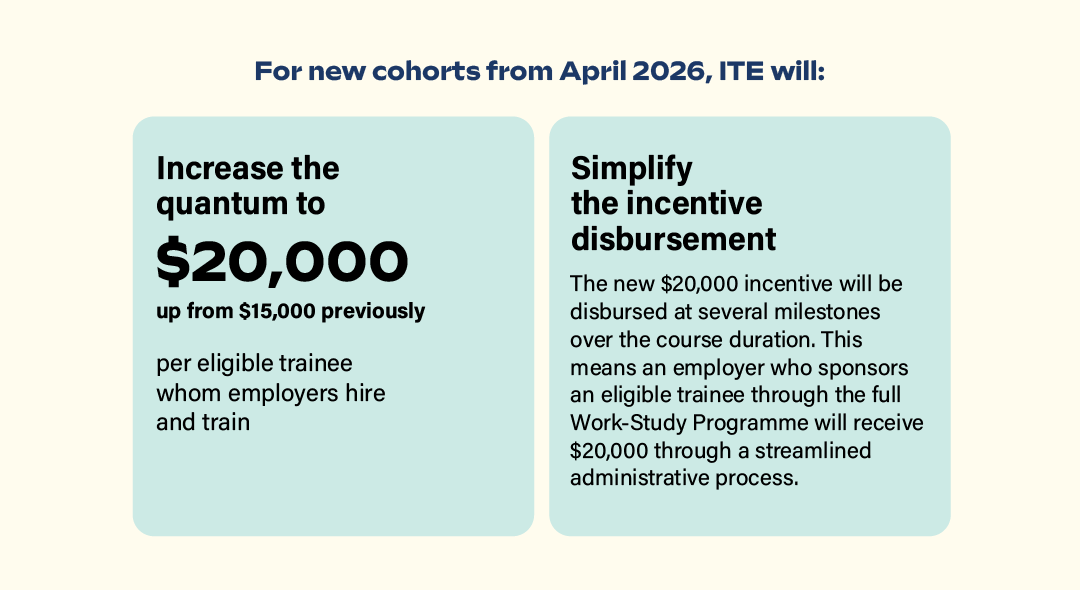
To encourage more employers to come onboard and provide training opportunities to learners, MOE and SSG will enhance the employer incentives for the ITE Work-Study Diploma for new cohorts from April 2026.
MySkillsFuture Portal Enhancements
SSG will launch a revamped MySF portal by 2Q this year to provide a more customised user experience and encourage industry-relevant upskilling.
Users can search for courses covering in-demand skills more easily and receive personalised training recommendations through an AI-powered digital advisor.

Working Together for a Stronger Education System
More support for Mother Tongue Language Learning and Promotion Committees (MTLLPCs) to strengthen bilingualism
MTLLPCs will receive a funding of $33 million from FY2026 to FY2030 (up from $30 million for FY2021 to FY2025) to support a wider range of activities and programmes for students and parents.
The MTLLPCs will extend their reach and impact by empowering families as the primary language learning partners.
MTLLPCs will also establish stronger partnership with community groups to enhance existing programmes, and scale community outreach by tapping on digital platforms to reach wider audiences.